
Structural work in the field of easel painting conservation is a vital aspect of preserving and maintaining the physical integrity of artworks. This conservation branch focuses on addressing issues related to the support structure of paintings. Key considerations include ensuring the stability of the painting, addressing structural damage, and implementing measures to prevent further deterioration.
Conservators engage in structural interventions to address various issues, such as tears, deformations, and instability in the support. These challenges can arise due to factors like environmental conditions, handling, or the natural aging of materials. The goal is to stabilize the painting and provide support that minimizes stress on the artwork.
Examples from my practice
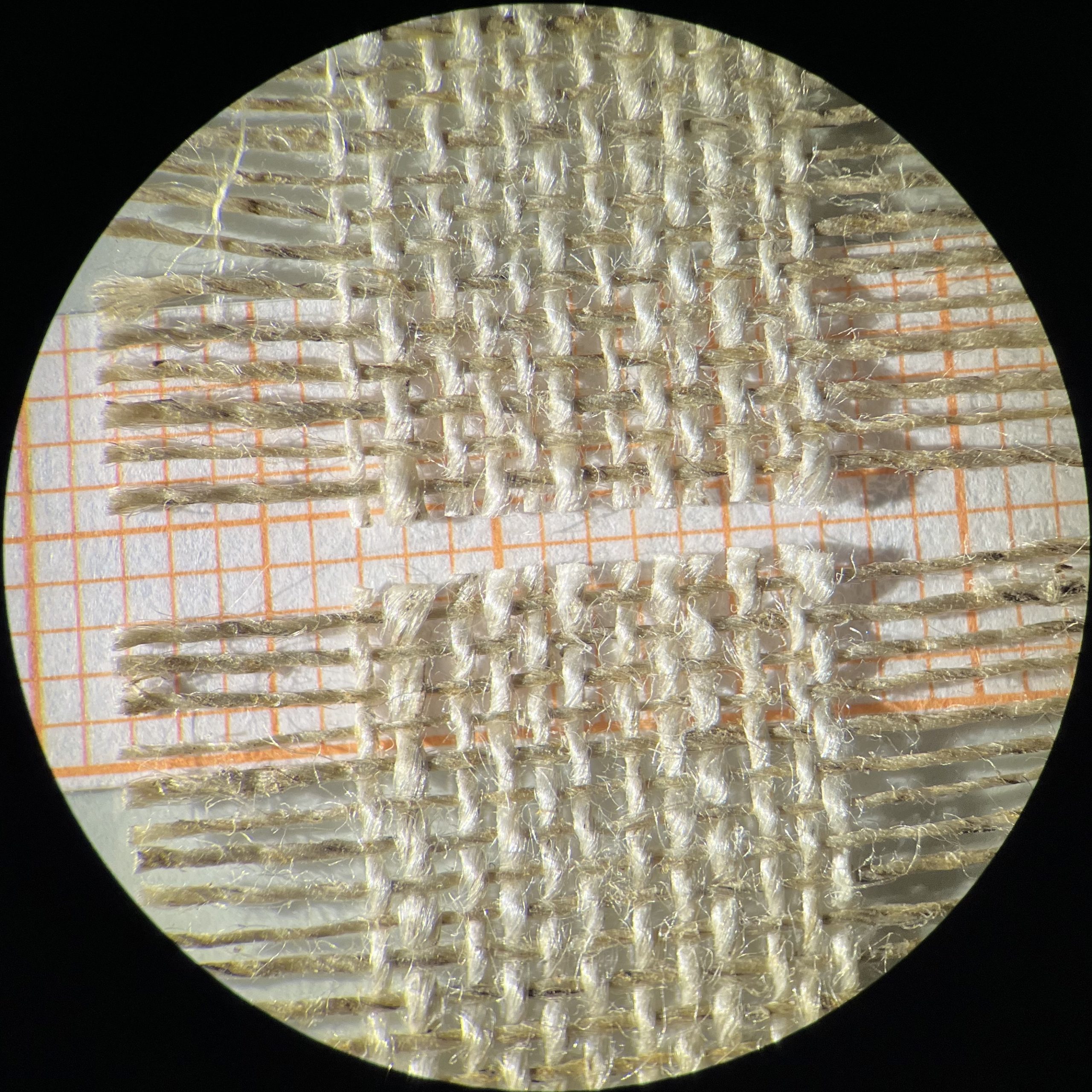
Before and after tear mending.
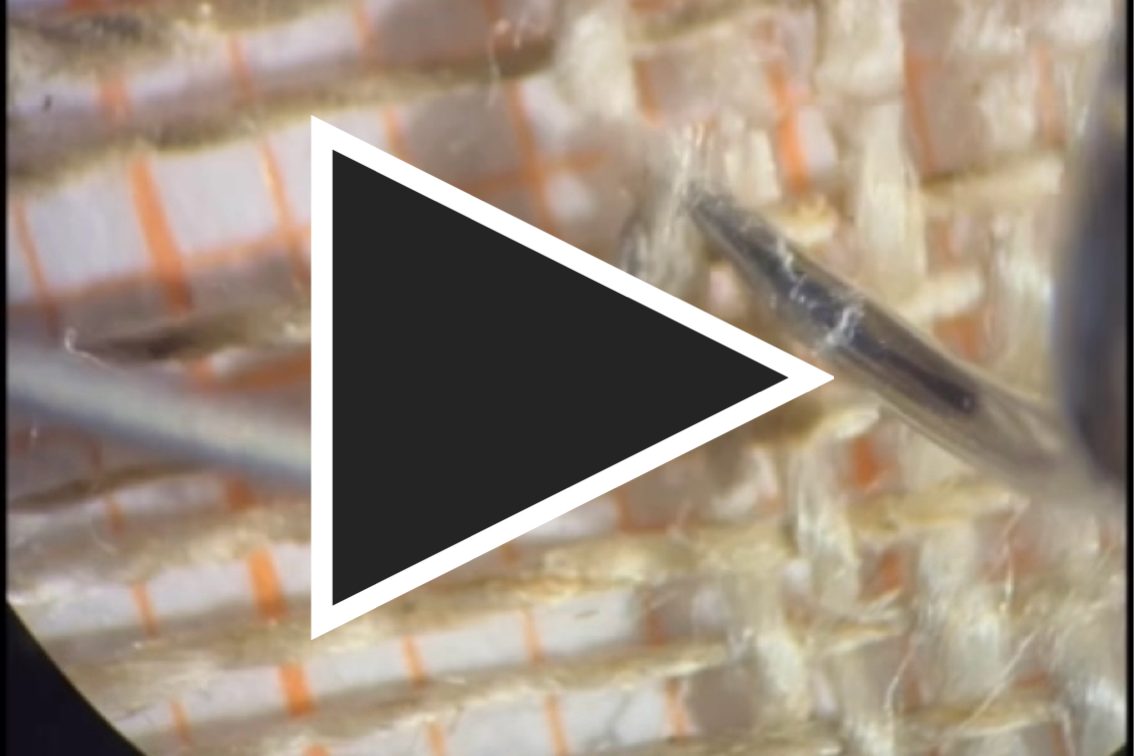
Thread-by-thread tear mending using a butt joint. Sped up 20x.
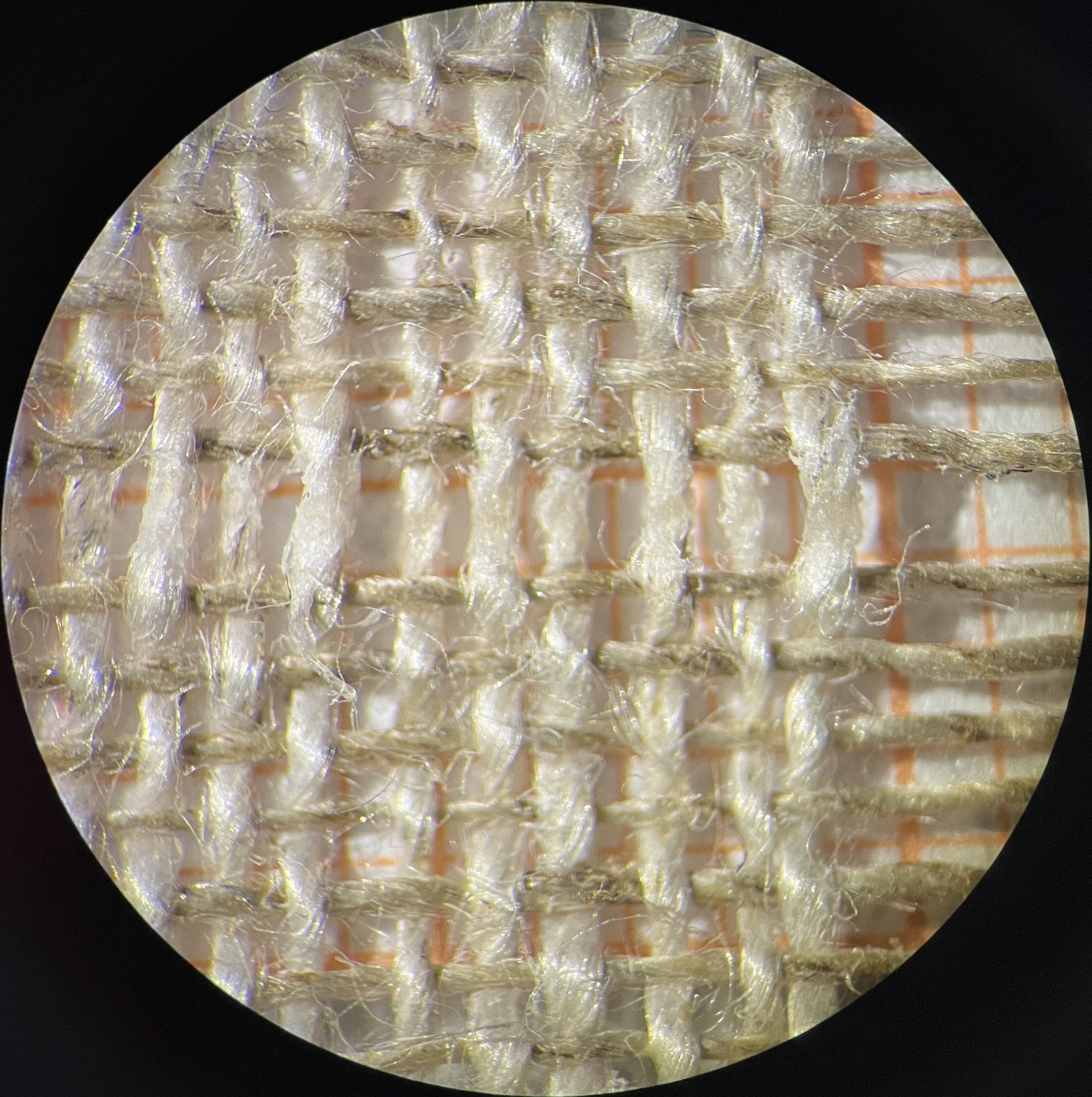
Each orange square represents 1 mm.
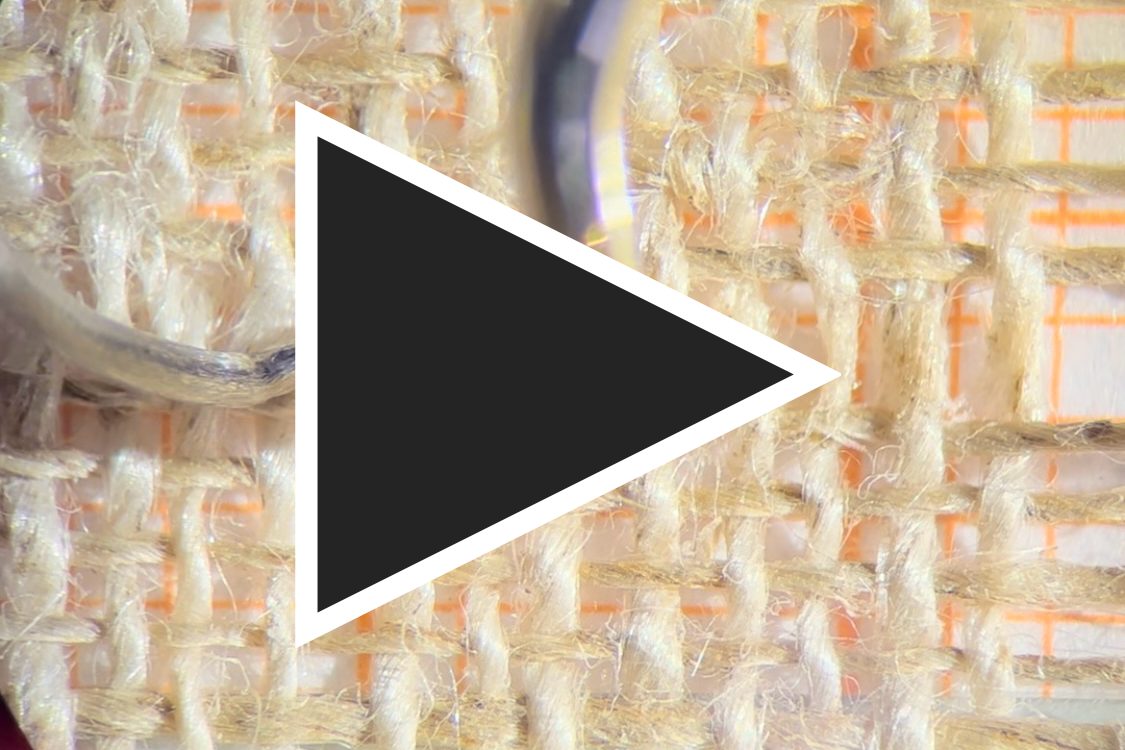
Thread-by-thread tear mending using an overlapping joint, intermingling the threads for extra bonding strength. Sped up 20x.
Tear mending practice
During a tear-mending workshop led by specialist Petra Demuth, I got ample opportunity to practice various ways of mending a tear. On this mockup (images on the left), I mended the tear using the thread-by-thread tear mending technique to join each thread back together using a butt joint. Ideally, threads are intermingled and adhered with an overlapping joint for optimal bonding strength. In the videos on the left, you can see me using both techniques.
In reality, mending a tear on a painting often calls for the combination of different joining techniques.
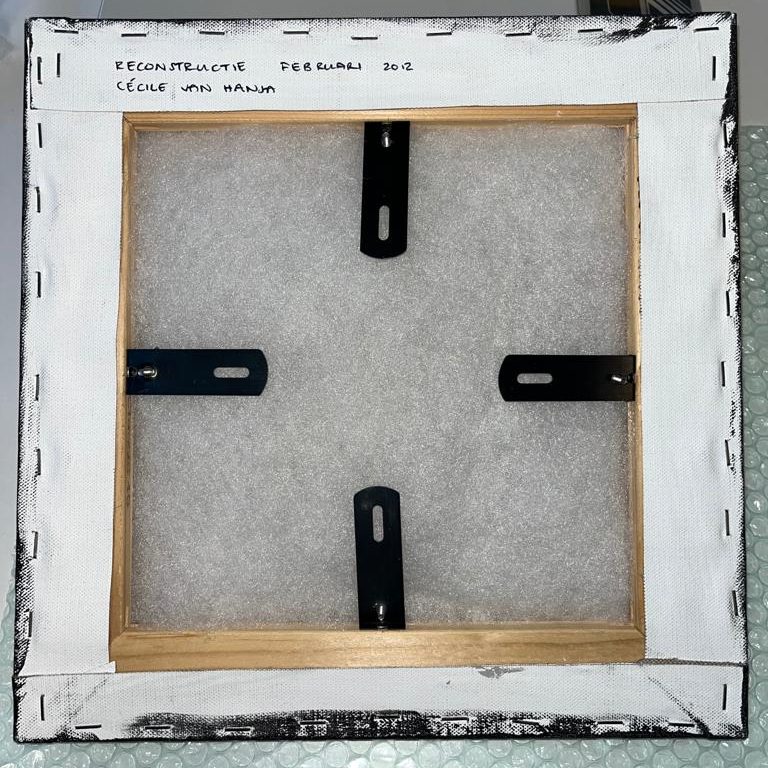
Padding and support structure screwed into the sides of the stretcher bars
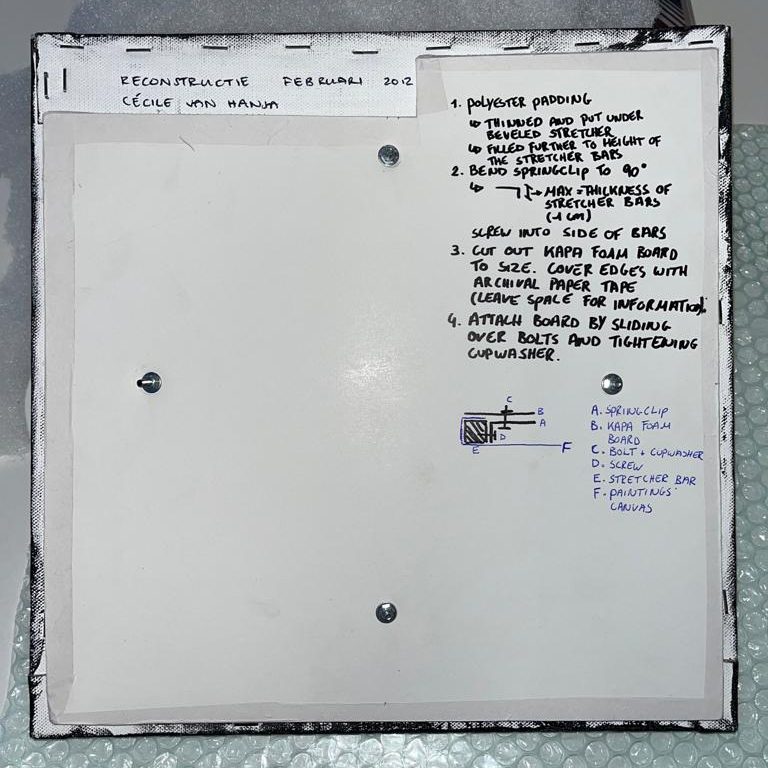
Final look after attaching the backing board to the support structure
Custom-designed backing board
During a two-day workshop on backing boards, I experimented with various materials and ways of mounting the backing boards. This led to the design and prototype of a new way of mounting backing boards, involving L-shaped brackets screwed into the sides of the stretcher bars rather than on top. This technique of mounting is especially useful when the canvas stretches over a large part of the stretcher bars on the backside of the painting, and one does not wish to dismount the canvas from the stretcher or drill through it. In addition, the brackets do not touch the painting’s canvas as is sometimes the case when using clips to mount the backing board. Furthermore, using bolts to connect the backing board to the brackets allows for the backing board to close tightly to the stretcher bars, preventing dust from entering in between the board and the painting.
Note: for this prototype, materials available in the studio were used. In an ideal situation, the brackets are shorter, extending only as far as needed to put the bolt in.
Workshops
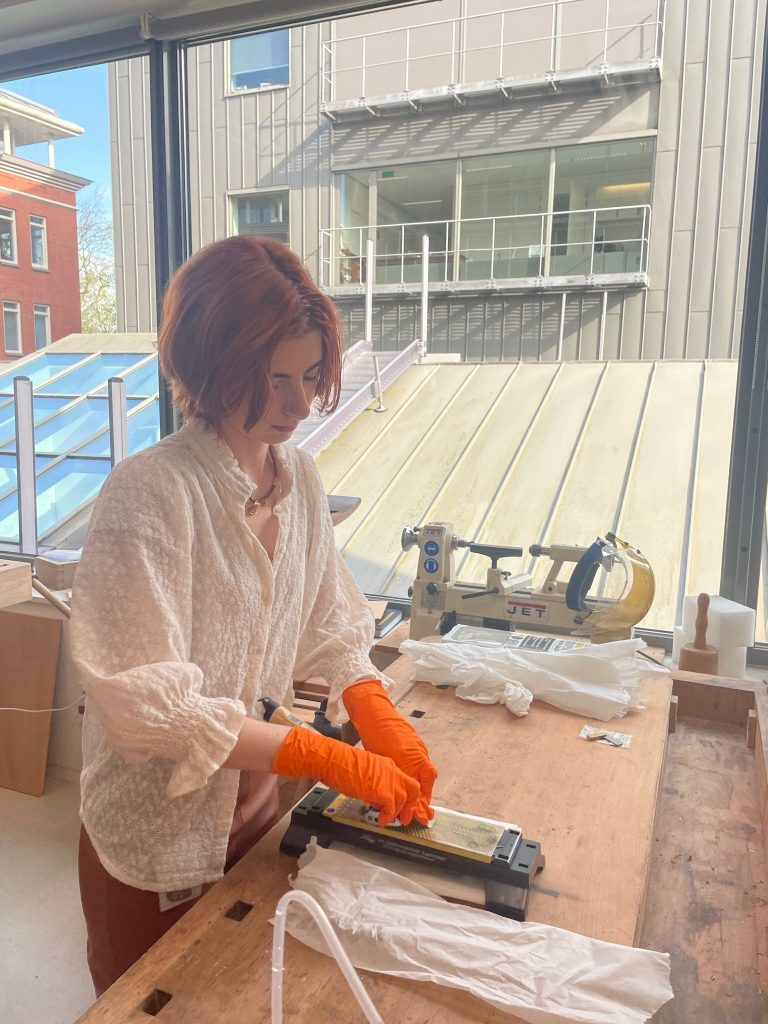
Sharpening a chisel as part of the reconstruction process of a traditional cradle
Workshop on the remedial conservation of panel paintings by Luuk Hoogstede
University of Amsterdam, April 2024
This two-day workshop introduced us to common remedial structural conservation issues in northern European panel paintings and taught us how to treat them. We discussed how to ascertain whether a cradle is still functioning, if it is causing any damage, and how to adjust or remove it when necessary. Various modern versions of the cradle were explored, and several examples from practice were investigated. During the practical part of the workshop, we recreated a traditional cradle to experience firsthand the difficulties and possible problems that may arise during such an intervention. Furthermore, we got to apply our newfound remedial knowledge for such problems to a cradled painting.
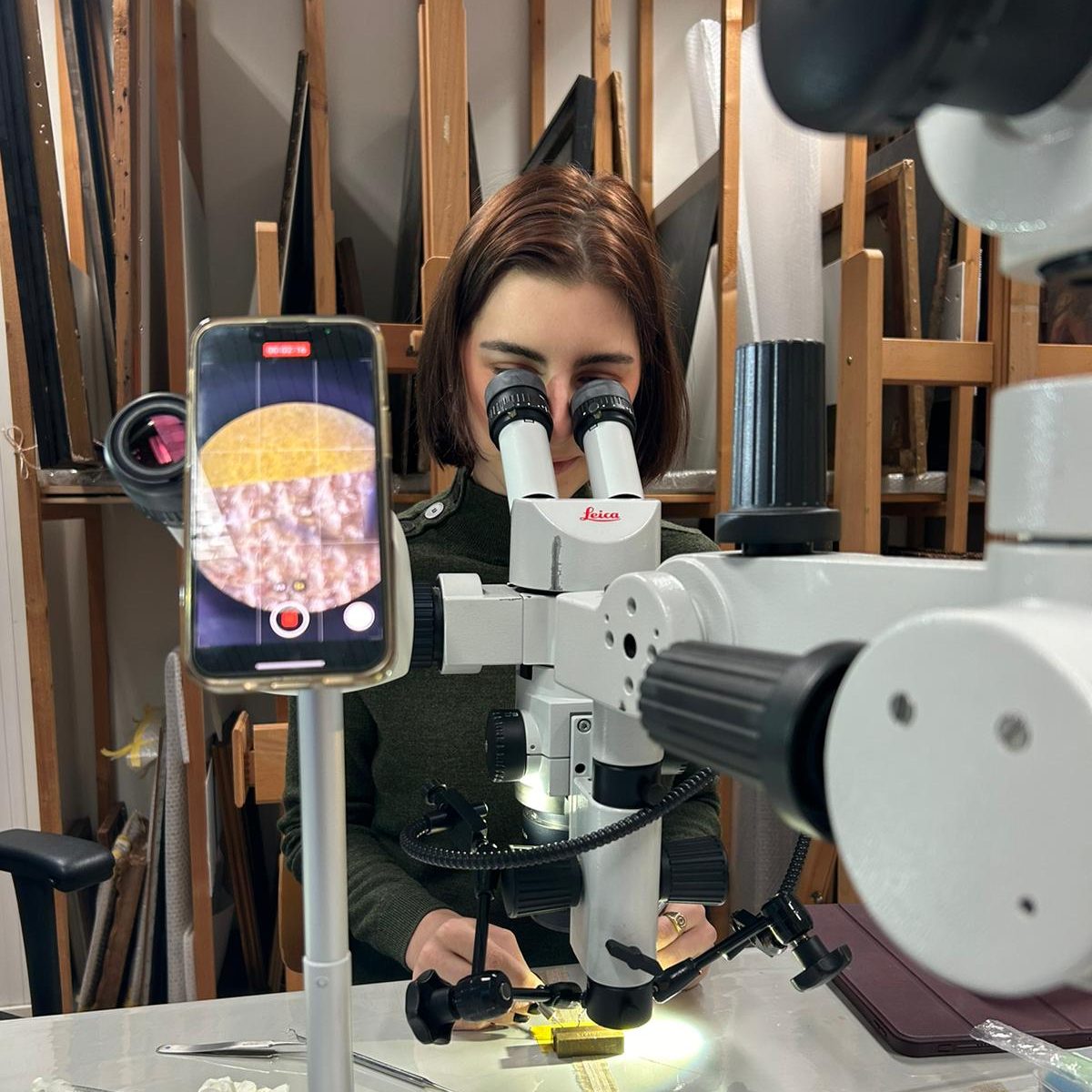
Practicing the thread-by-thread mending technique using a stereomicroscope
Workshop on thread-by-thread tear mending by Petra Demuth
University of Amsterdam, January 2024
During this three-day workshop, the aims, rationale, and history of the single-thread bonding technique (also referred to as thread-by-thread tear minding) were illustrated by specialist Petra Demuth. The various instruments, joining strategies, reweaving techniques, and realignment of open tears were demonstrated, after which the participants got the opportunity to practice this newfound knowledge using specialized tools and microscopes. This also involved extensive discussions on the choice of adhesives, providing additional support to the canvas by the use of bridging threads and the making and inclusion of inserts.
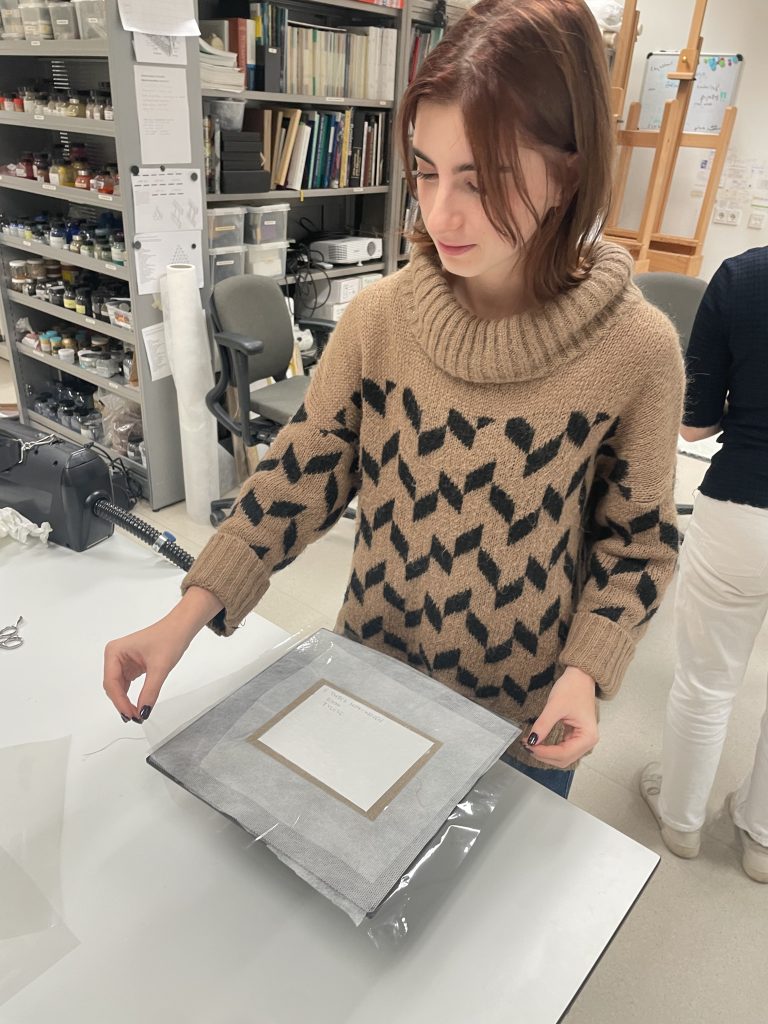
A sample of canvas being lined using modern, synthetic materials and a low-pressure cold-lining table
Workshop on modern lining techniques by Marie Noelle-Laurent
University of Amsterdam, December 2023
The 1960s marked a significant shift in art conservation, emphasizing the artwork’s integrity through principles of stability, reversibility, and material compatibility. This shift brought a deeper focus on understanding the mechanical stress impacting easel paintings and how traditional treatments might affect them.
Conservators began exploring how artworks react to environmental factors like humidity and temperature. The introduction of synthetic materials (such as polyester canvas and acrylic emulsions) and new equipment (like extension frames and low-pressure tables) was crucial in advancing the field. These developments allowed for more precise and effective conservation methods.
During this workshop, hands-on experience in modern lining methods for canvas paintings was combined with theoretical knowledge of various methods and variations.
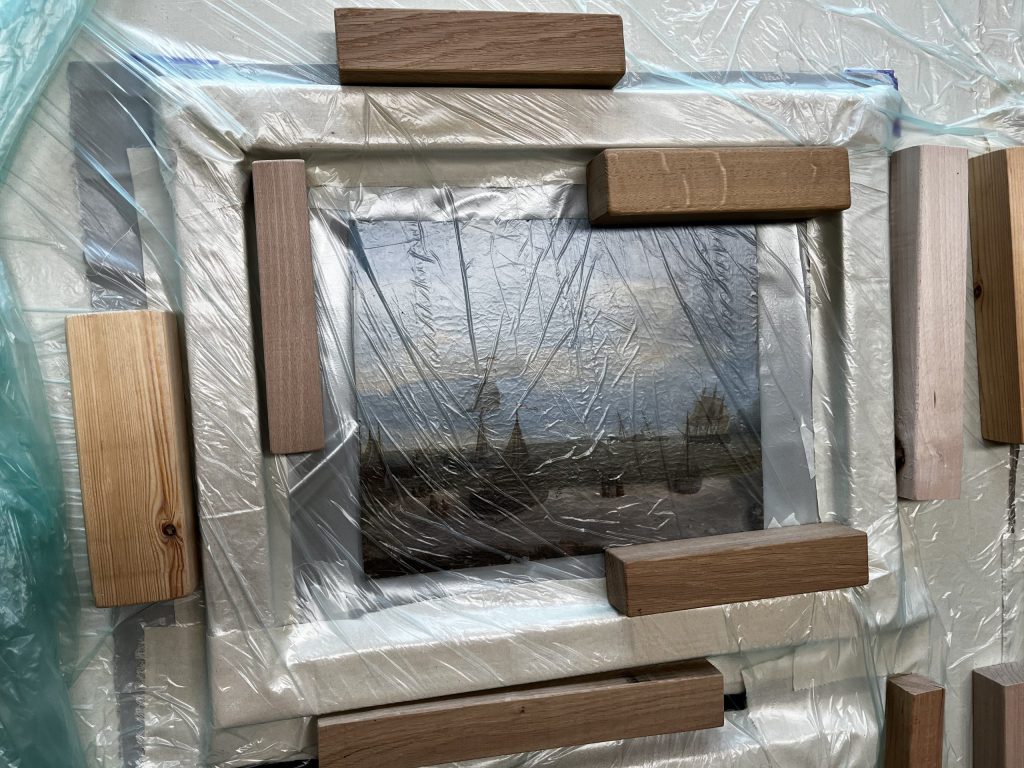
Painting under low pressure on the suction table
Workshop on mist lining by Restauratieatelier Antwerpen
Restauratieatelier Antwerpen, March 2025
Recently, I had the opportunity to take part in a workshop on Mist-Lining at Restauratieatelier Antwerpen, a method originally developed at the SRAL (Stichting Restauratie Atelier Limburg) in the 1990s by Jos Van Och and Kate Seymour.
The workshop began with a historical overview of different lining techniques and the adhesives traditionally used. Rather than teaching outdated procedures, the workshop highlighted the strengths and weaknesses of these methods, offering valuable context for understanding the evolution of structural treatments. We also explored tensile strength tests of various adhesives under different conditions — data that can inform more confident and responsible choices in conservation practice.
The core of the workshop focused on the Mist-Lining technique itself. Building on the earlier Cold-Lining system by Mehra, Mist-Lining uses a fine spray of adhesive to create a controlled bond between the painting’s canvas and a new support. During the session, we examined the many parameters that influence the process, studied the results through graphs and data, and then put theory into practice: constructing a vacuum envelope, testing adhesive application, and finally carrying out a complete Mist-Lining.
This hands-on approach not only deepened my understanding of the method but also gave me practical experience with its nuances. I left with a greater appreciation of the technique’s precision and potential, as well as insight into when and why Mist-Lining may be the most suitable treatment option.
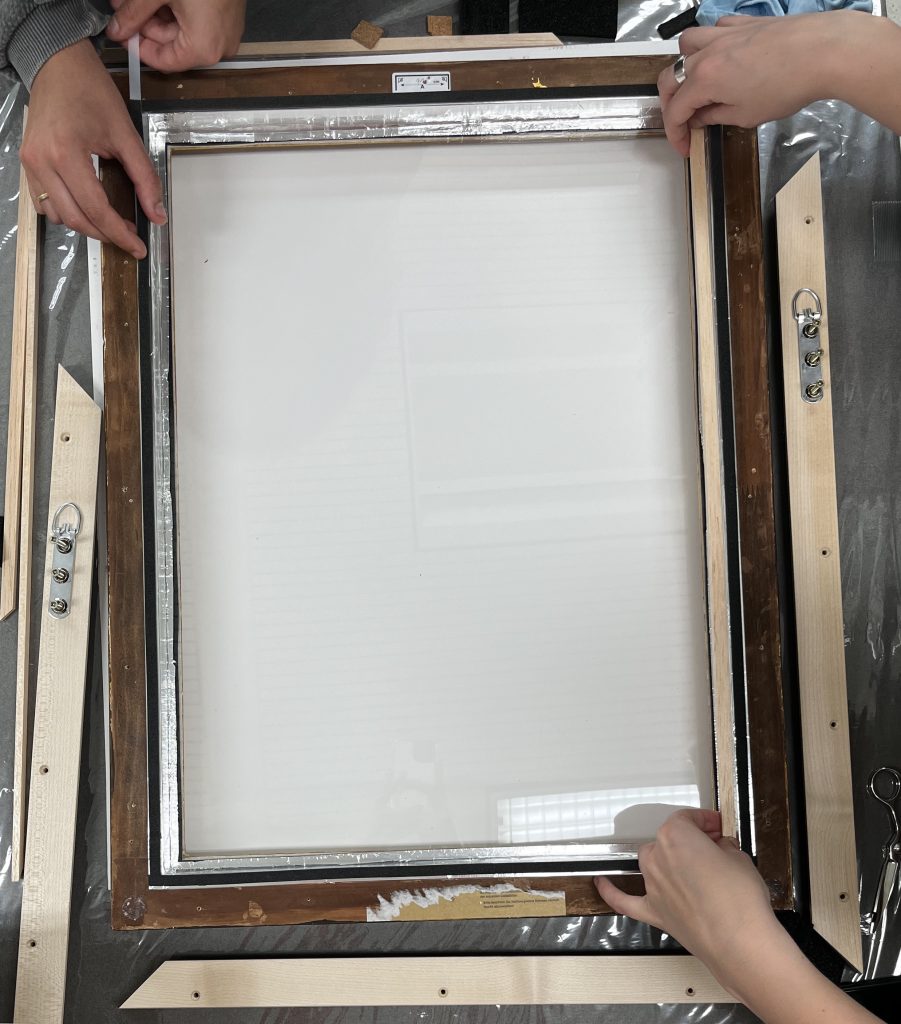
Framing a mockup painting
Workshop on framing and casing by Ingrid Hopfner
University of Amsterdam, May 2024
Historically, frame and panel paintings were carved from the same piece of wood, forming a single unit. Over time, frames became separate entities, crucial for defining the artwork’s appearance and providing structural support to panels made from joined planks.
Apart from an aesthetic function, the frame also serves an important practical role in conservation. It plays a key role in protecting paintings during transport and facilitating reverse-side protection by integrating backing boards. In addition, a custom-made casing can also protect the painting from climate fluctuations.
This workshop explored these concepts through lectures and hands-on sessions, providing practical examples and insights into effective framing techniques for conservation.
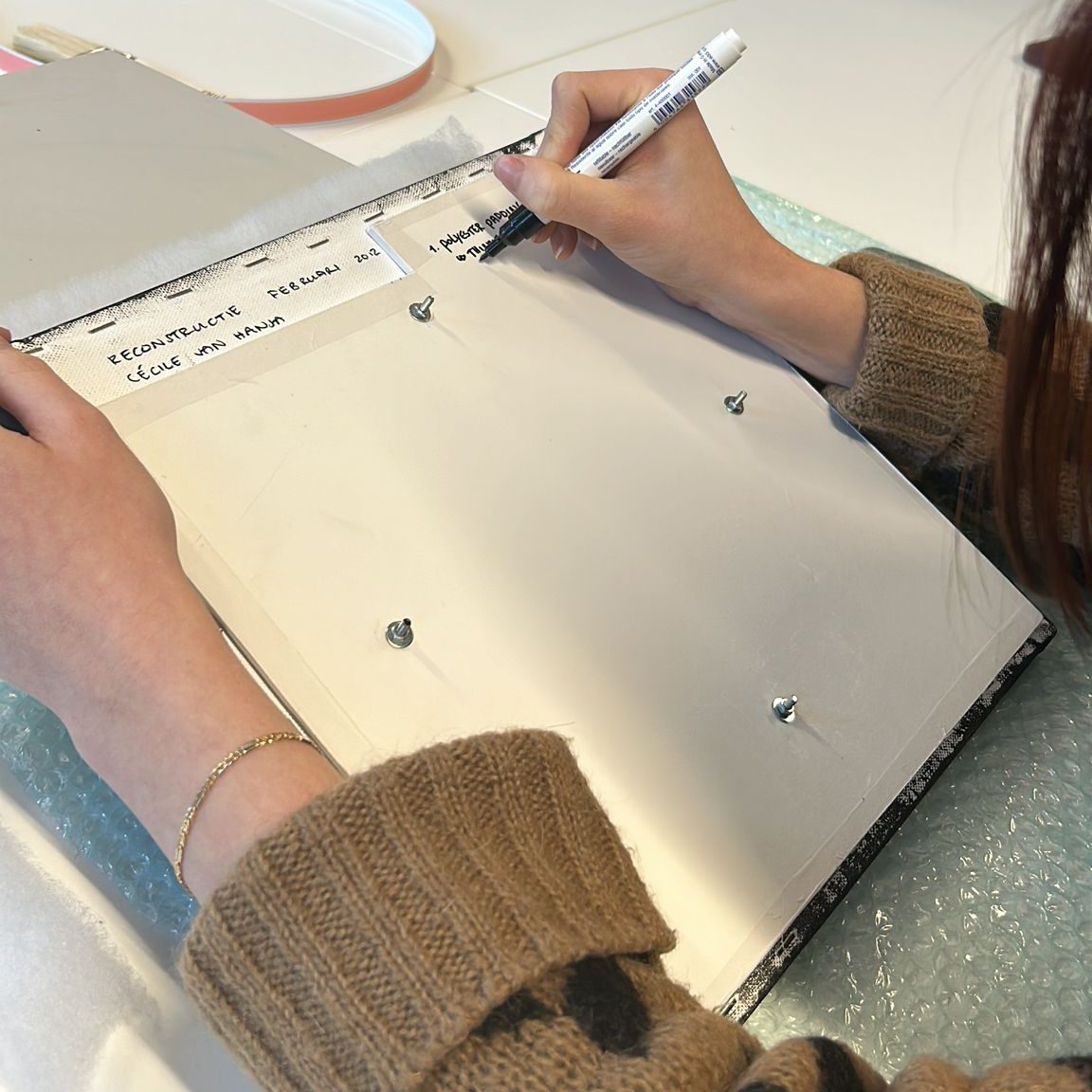
Finishing off a custom-designed backing board
Workshop on backing boards and reverse side protection for canvas-supported paintings
University of Amsterdam, January 2024
Preserving the longevity and stability of paintings involves more than just the visible surface. Care of the reverse side of canvas paintings plays a crucial role in maintaining their structural integrity, especially for non-lined textile supports. In this context, various backings and reverse side protections become instrumental in shielding artworks from environmental factors and mechanical damage.
This workshop delved into the theory and practice of backing boards. The physics of canvas paintings and their agents of deterioration were examined in order to gain deeper insight into the function of reverse side protection. The history of this conservation intervention was explored, and various materials were investigated. During the practical side of the workshop, we tested different materials and techniques of mounting and used the opportunity to think of novel ways a backing board could be designed.
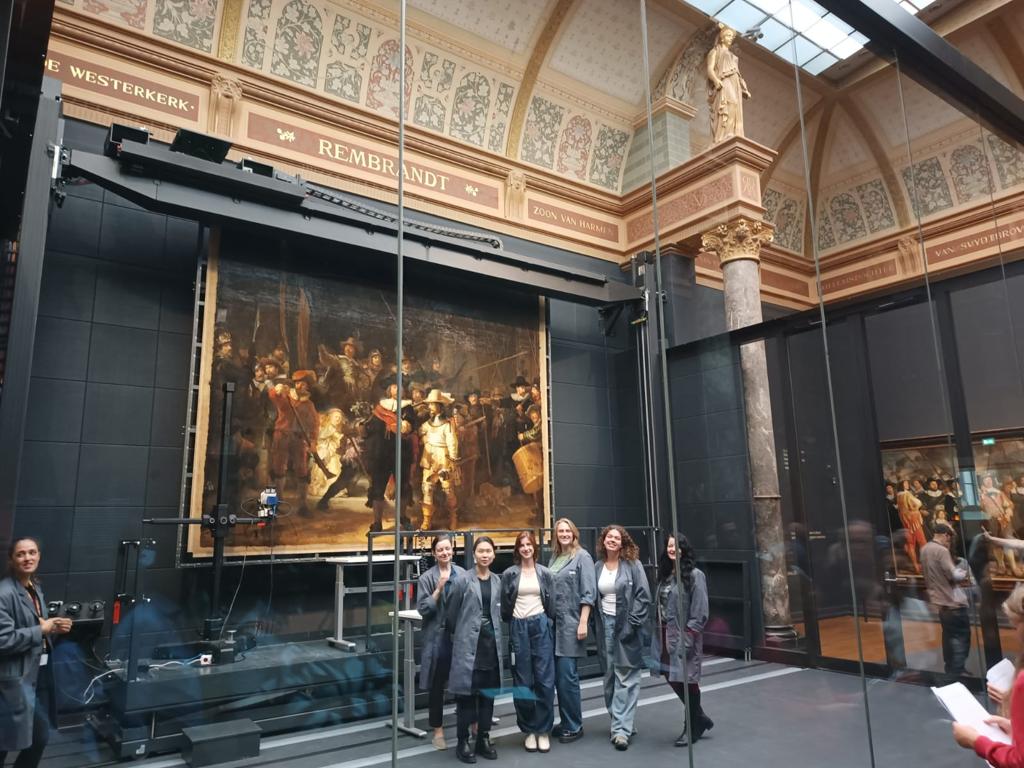
A closer look at The Night Watch, Rijksmuseum.
Workshop on Traditional and Elastic Methods for Tensioning Paintings by Antonio Iaccarino Idelson
University of Amsterdam, November 2023
The one-day course titled “Traditional and Elastic Methods for Tensioning Canvas Paintings,” was led by the esteemed conservator Antonio Iaccarino Idelson. His experience, including notable projects like the tensioning of Rembrandt’s The Night Watch and works at the Louvre, provided a rich backdrop for the workshop.
The course kicked off with a deep dive into the history of canvas tensioning systems. Antonio navigated us through the evolution from traditional to modern tensioning methods, emphasizing the mechanical behaviour of canvas paintings. The session was enriched with historical case studies, offering a practical perspective on theoretical concepts. We wrapped up the morning session with a special glimpse behind the glass of The Night Watch at the Rijksmuseum.
Afterward, we transitioned to a hands-on session. Here, we applied our morning’s learning to stretch canvas paintings using tensioning systems devised by Antonio, which is currently applied to The Night Watch. This practical experience was invaluable, giving us a real-world understanding of tension evaluation in canvas paintings.
SMACH, Science & Mechanics in Conservation of Heritage (https://sites.google.com/ceciliagauvin.com/s-ma-c-h/home)
Workshop on the Mechanical Behaviour of Paintings on Canvas by Cecilia Gauvin (SMACH)
University of Amsterdam & SMACH, October 2023
This workshop provided a deep dive into the mechanical behaviour of canvas-supported paintings. The course began with an essential introduction to the mechanics of canvas materials. This foundation was crucial for understanding the complex interactions within paintings on canvas, particularly under fluctuating environmental conditions.
A significant portion of the workshop focused on identifying and analyzing mechanical failures common in canvas paintings, such as cracks, paint layer delamination, and planar deformations. This analysis is vital for developing effective preventive conservation strategies and remedial solutions.
A key takeaway from this workshop was the enhanced capability to develop conservation strategies tailored to tackle structural issues in canvas-supported paintings. The insights gained are invaluable for any conservator, providing the tools necessary for both preventive and remedial interventions.
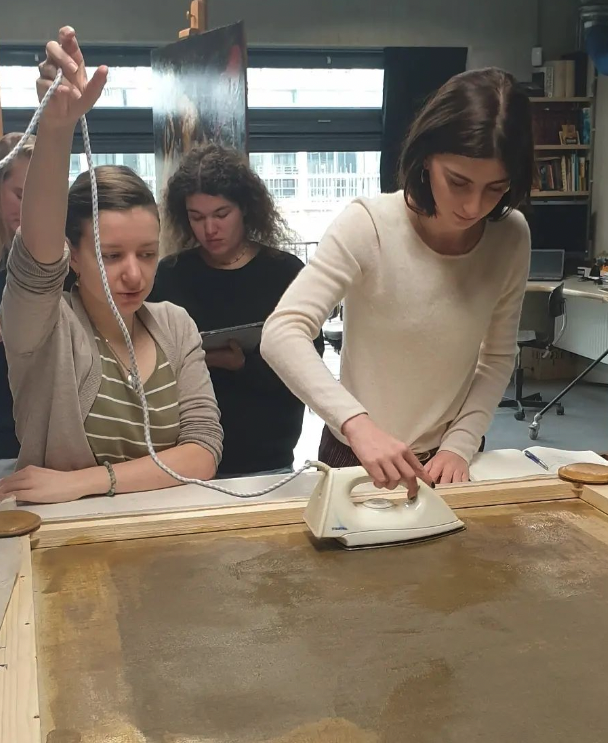
Heating the wax-resin adhesive on the back of the lining canvas using an iron.
https://michelvandelaar.nl/
Workshop on the Wax-Resin Lining Technique by Michel van de Laar
University of Amsterdam & Studio Michel van de Laar, February 2022
This fascinating workshop delved into the Dutch wax-resin lining method, a traditional technique in painting restoration. Developed in the 19th century by Nicolas Hopman and his son Willem, this method was a significant part of Dutch conservation history and was widely used by painting restorers in Dutch museums.
The focus of the workshop was on understanding the wax-resin lining process in order to facilitate the treatment of wax-resin lined paintings today. We learned that about 90% of Dutch museum paintings have undergone this treatment, leading to irreversible effects such as surface flattening, increased weight, and material infusion into the paint layers.
In a rare opportunity, we collaboratively worked on a painting using the wax-resin lining technique under the expert supervision of conservator Michel van de Laar. The painting was carefully selected for its educational value and the potential for improvement through the lining process.
The workshop allowed us to observe the effects of this treatment on a painting, which was crucial for understanding the technique’s impact. This experience helped us appreciate why current conservation ethics view this method as invasive and irreversible and why it’s no longer widely supported.
This workshop was not just a learning experience but a journey through a key part of Dutch art conservation history. It highlighted the importance of understanding historical restoration techniques to better interpret the current condition of historical paintings and the evolution of conservation practices.